Guides.
The reasoning behind the numbers on the tags — written from building the calculators, and checkable against the label on your own can.
A calculator gives you a quantity. It cannot tell you whether you measured the right surface, whether the coverage rate on your product matches the default it assumed, or whether the number it produced is a shopping list or a structural plan. These guides cover that part — the decisions around the arithmetic, where the real money is won and lost.
-
 01
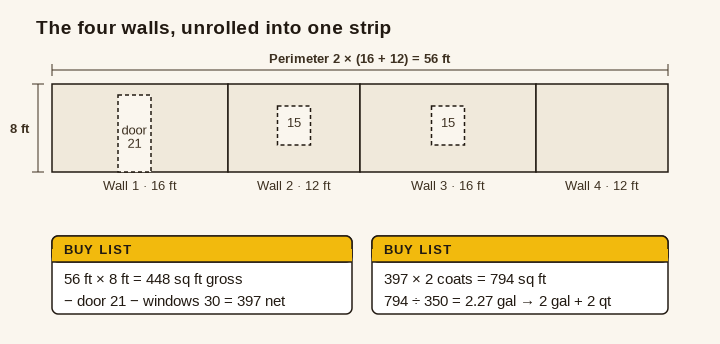
How much paint do you actually need
Why 350 square feet per gallon is only a starting point.
-
 02
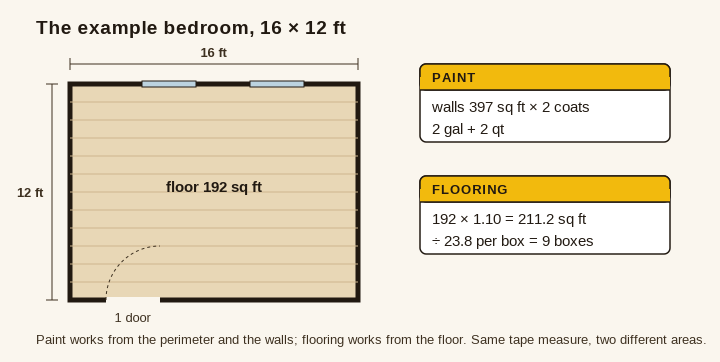
One bedroom, two buy lists
Follow a 16 × 12 foot illustrative room from measurements to paint cans and flooring boxes.
-
 03
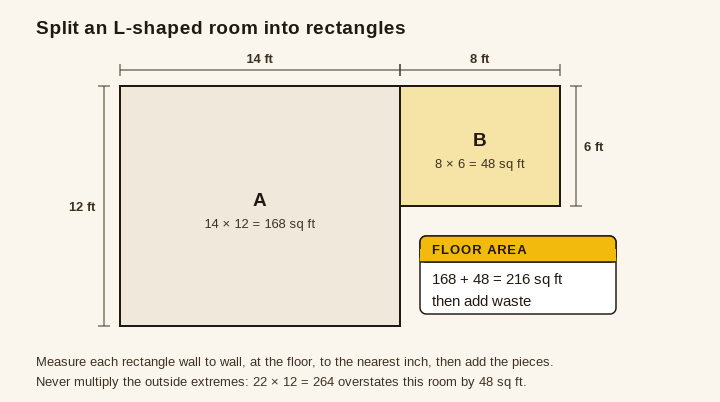
How to measure a room properly
The step before every calculator, and the one that costs the most when it goes wrong.
-
 04
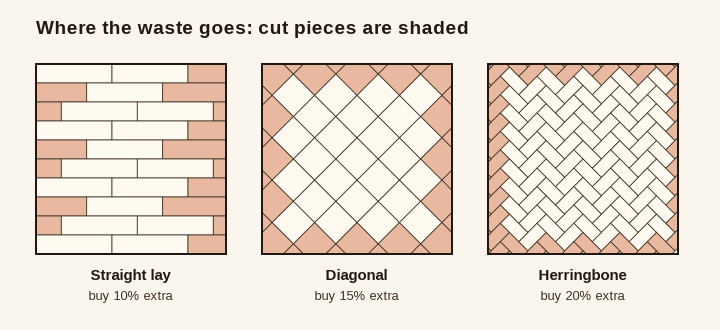
Why you buy 10% more flooring than your room
Waste allowance is material the installation really uses. What sets the number.
-
 05
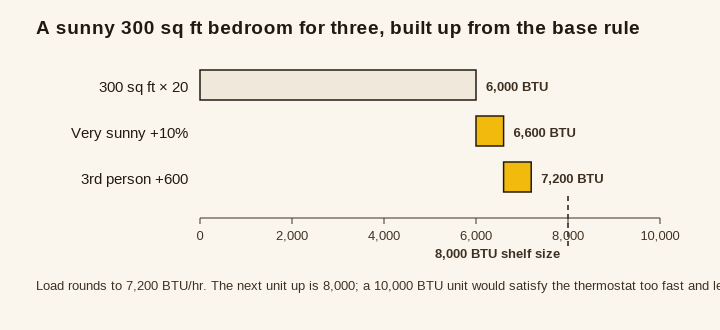
Sizing an air conditioner: what BTU actually means
Bigger is worse. Why oversizing an air conditioner makes a room clammy instead of cool.
-
 06
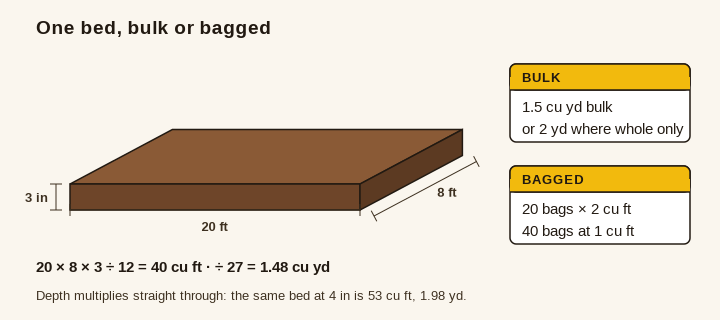
Mulch and gravel: yards, bags and tons
Cubic yards, 2-cubic-foot bags and tons: three units for the same pile, and how to move between them.
-
 07
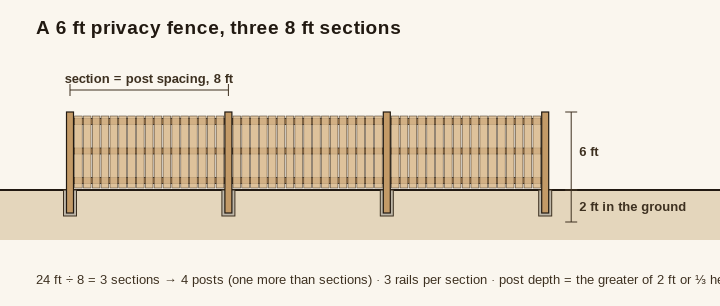
Deck and fence material lists, from first principles
How the counts are derived, and the questions a material list deliberately leaves to your building department.
-
 08
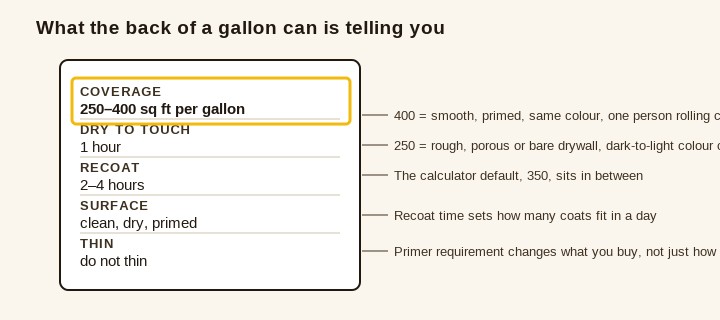
How to read a coverage label
The number on the can is a laboratory result. How to translate it into your room.
-
 09
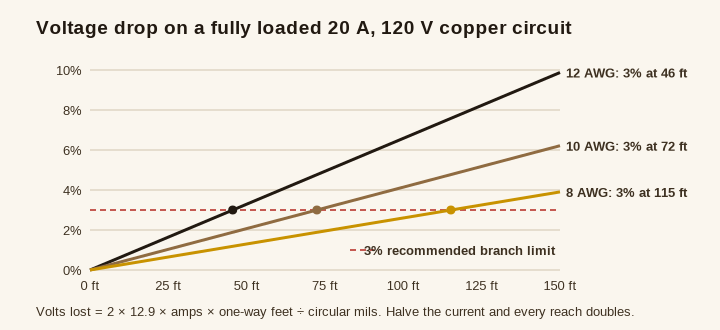
Wire size, breakers and voltage drop
Two questions decide a wire size, and only one of them is on the table.
-
 10
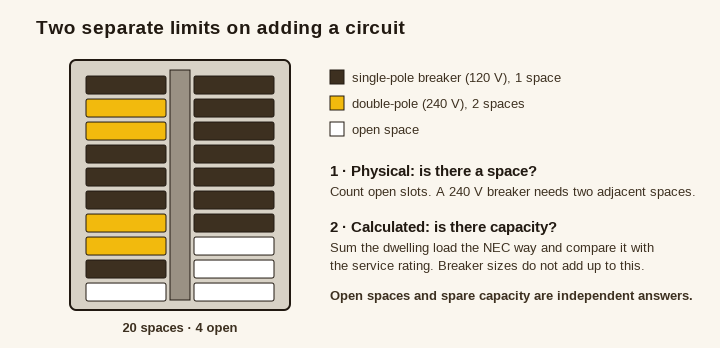
Does my panel have room for it
Full of breakers and short of amps are different problems with different fixes.
-
 11
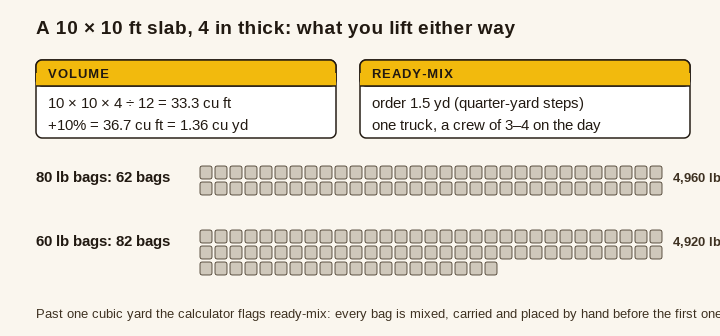
Concrete: bags or a ready-mix truck
Cubic yards, bag counts, and the size of pour where mixing by hand stops making sense.
-
 12
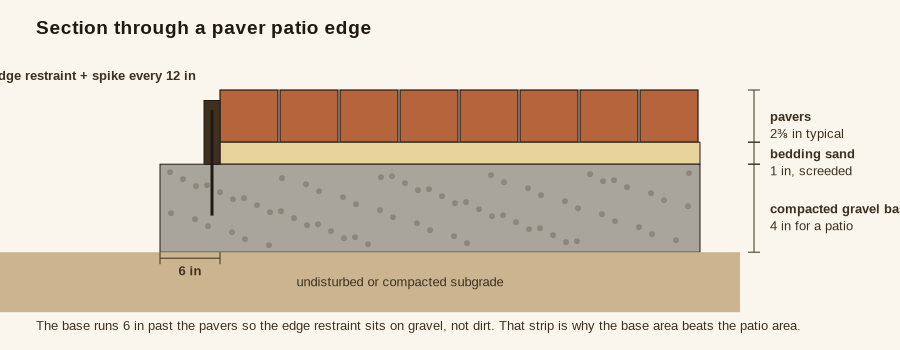
A paver patio is three orders, not one
Pavers by the piece, base by the ton, sand by the yard or bag, and why the base is bigger than the patio.
-
 13
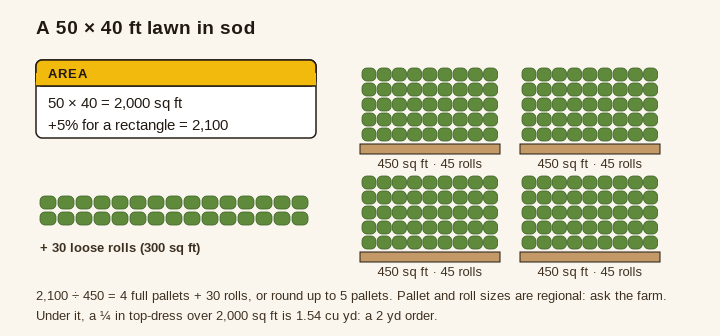
A new lawn: sod or seed, and the soil under it
Pallets and rolls, pounds of seed per thousand square feet, and the topsoil both of them need.
-
 14
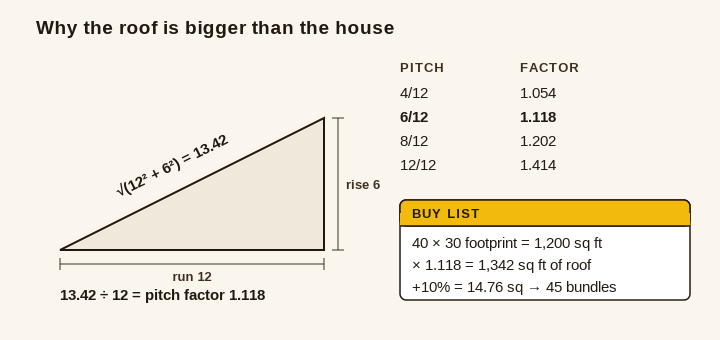
Roofing squares, pitch and bundles
The pitch factor, the square, and the edge lines that are bought by length instead of area.
-
 15
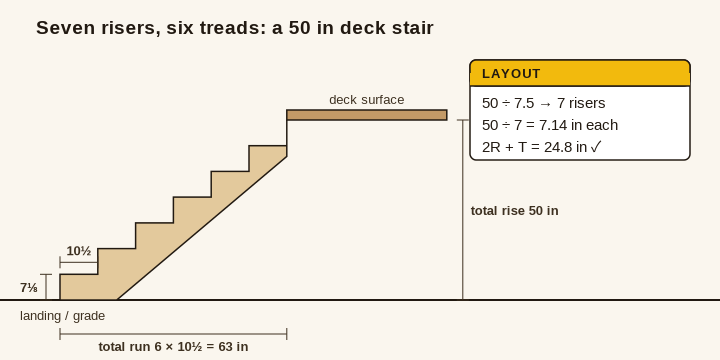
Stair layout: rise, run and the stringer
Total rise to riser count, the comfort check, and why the top step is the one people get wrong.
-
 16
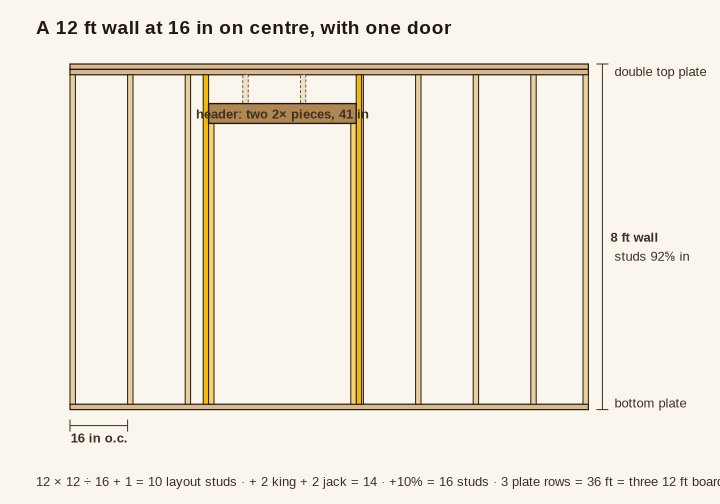
Counting the lumber in a framed wall
Studs by spacing, then the studs the spacing rule forgets: corners, openings and the second top plate.
-
 17
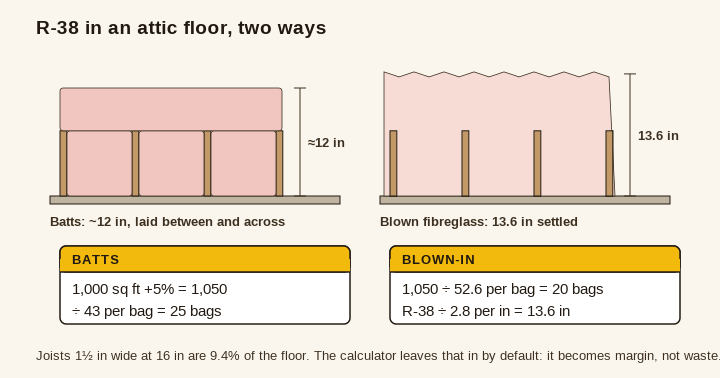
Insulation: from an R-value to a bag count
Pick the R-value first; the bag's coverage chart does the rest. Why batts and blown-in count differently.
-
 18
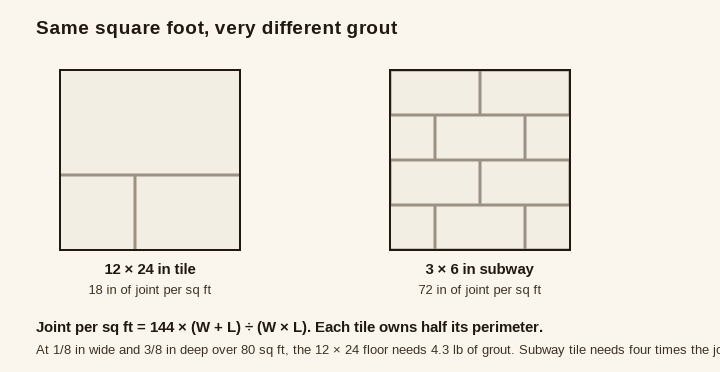
Tile setting materials: thinset, grout and backer
Thinset follows the trowel, grout follows the joint, and small tiles need several times the grout.
-
 19
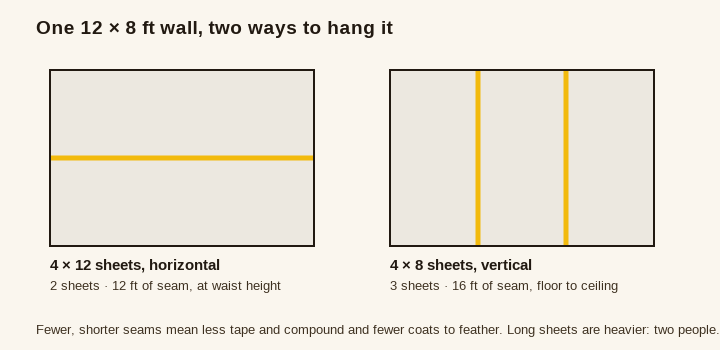
Drywall: sheets, seams, mud and tape
Sheet count from area, sheet size from the seams it leaves, and the finishing materials that get left off the list.
-
 20
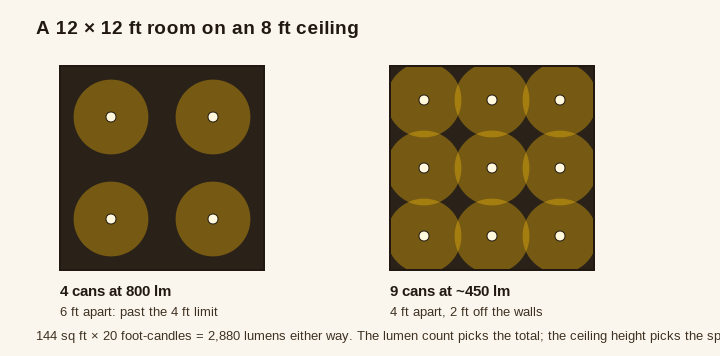
Recessed lighting layout: count and spacing
Lumens decide the total light; ceiling height decides the spacing. When they disagree, change the fixture.
-
 21
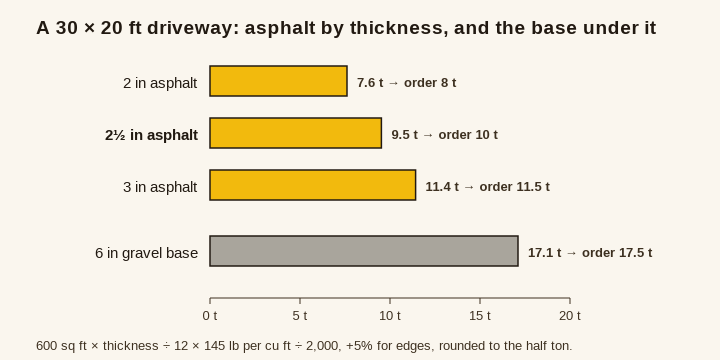
Asphalt driveways: tons, thickness and base
Asphalt is sold by weight. How area and thickness become tons, and why the gravel base usually outweighs the asphalt.
-
 22
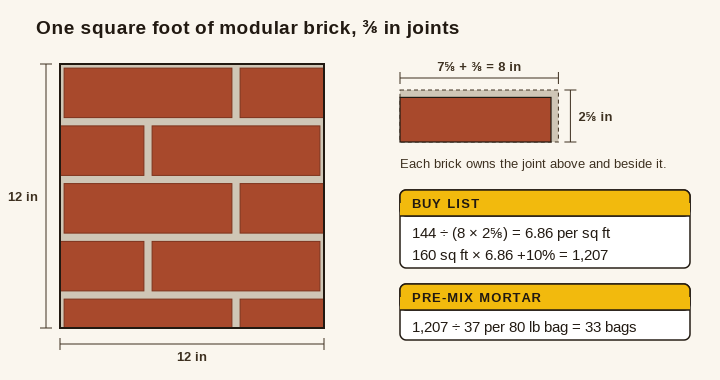
Brick and block: counting units and mortar
Units per square foot come from the face plus the joint. Mortar follows the unit count, not the area.
-
 23
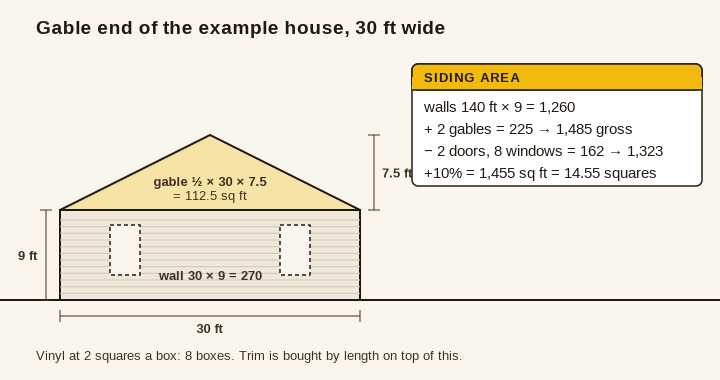
Siding: walls, gables, squares and trim
Rectangles for the walls, triangles for the gables, then the trim that is bought by the foot.
-
 24
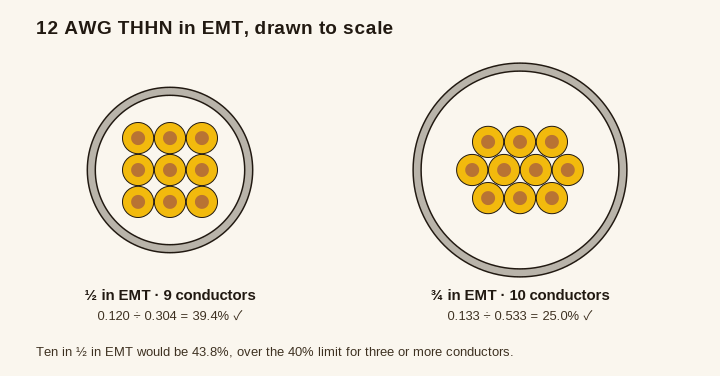
Conduit fill: how many wires fit
Add up the wire areas, compare to 40% of the conduit, then check the derating that the fill table does not.
-
 25
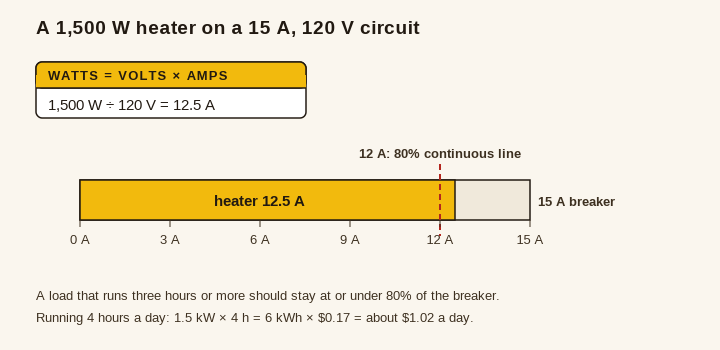
Watts, volts and amps on a household circuit
Watts = volts × amps, and why a 1,500 watt heater is a full load for a 15 amp circuit.
-
 26
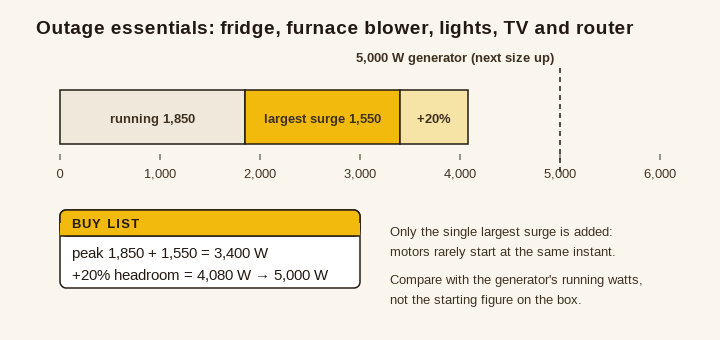
Sizing a backup generator: running and starting watts
Add the running watts, add the single largest starting surge, then leave headroom.
Straight to a tool
If you already know what you are estimating, all 33 calculators are on the board:
- Interior Calculators
- Square Footage, Paint, Wallpaper, Flooring, Drywall, Tile, Insulation, Wall Framing, Board Foot
- Landscaping Calculators
- Mulch & Soil, Topsoil, Gravel, Sand, Asphalt, Paver Patio, Sod & Seed
- Outdoor Structure Calculators
- Concrete, Fence, Deck Boards, Stairs, Brick & Block, Roofing, Siding, Rafters
- Electrical Calculators
- Wire Size, Voltage Drop, Conduit Fill, Service Load, Generator, Recessed Lighting, Watts & Amps
- Heating & Cooling Calculators
- AC Size, Electric Heat